
Policymakers asked to involve women in water resource management
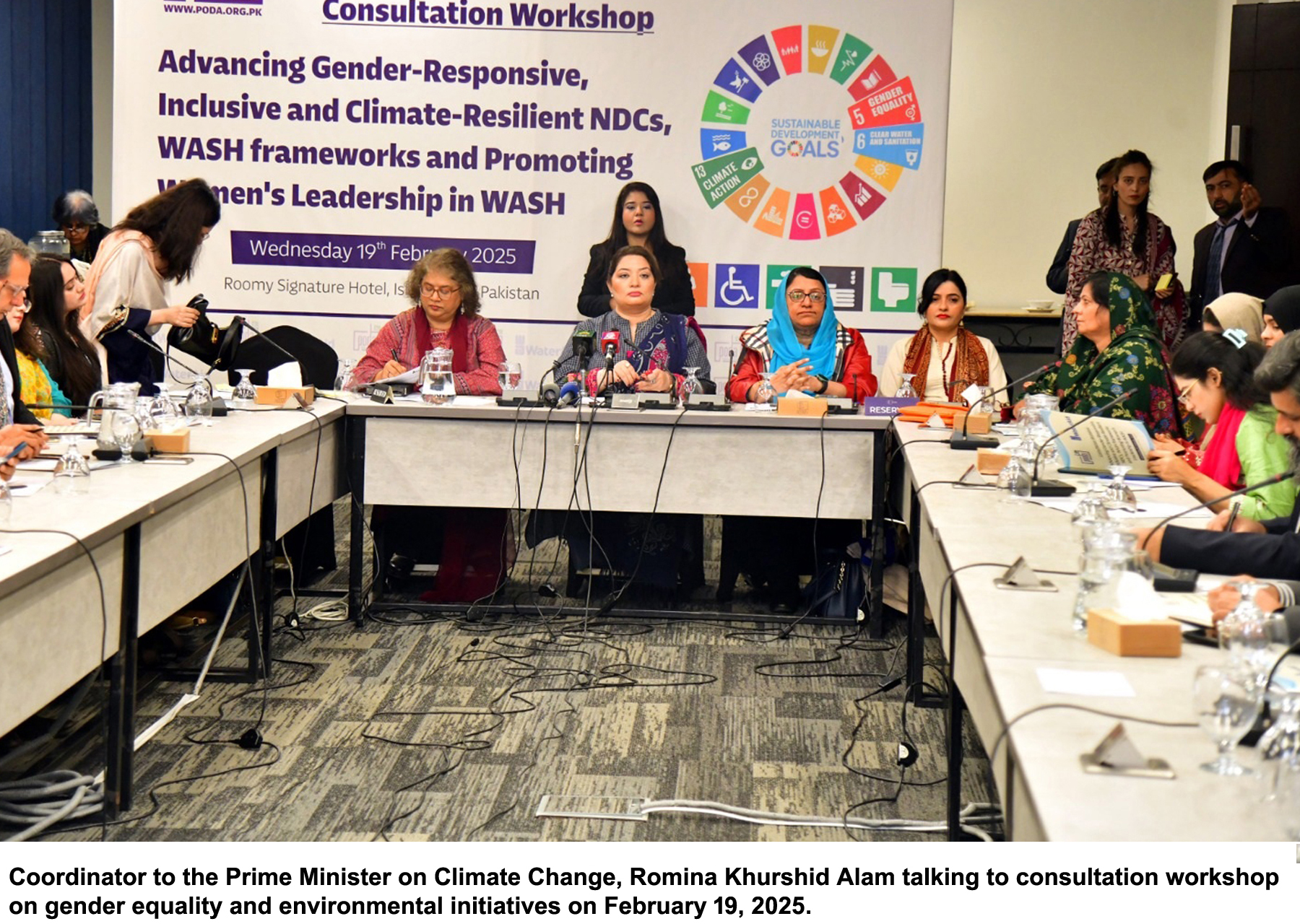
ISLAMABAD (February 19, 2025) - Speakers at a consultative workshop emphasised on policymakers and stakeholders to actively engage women in all aspects of water resource management, mainly in the face of climate-triggered disasters. The workshop was jointly organised by the Potohar Organization for Development Advocacy and WaterAid Pakistan The event brought together a diverse group of stakeholders to highlight the role of women and vulnerable populations in addressing Pakistan’s growing water crisis. Ranked 14th globally in terms of water scarcity, the country faces significant environmental challenges, including droughts, rising temperatures, and worsening sanitation conditions. Addressing the workshop as keynote speaker, Coordinator to the Prime Minister on Climate Change and Environmental Coordination Romina Khurshid Alam underscored the significance of collaborative efforts in tackling climate risks. She remarked that while Pakistan contributed minimally to climate change, organisations were working to build resilience and protect vulnerable communities. “The media plays a crucial role in ensuring that these challenges are understood and addressed by both citizens and decision-makers,” she added. Highlighting the disproportionate impact of climate-related disasters on women, Executive Director of PODA Sameena Nazir lamented their absence from key decision-making processes. “Women are often excluded from policy formulation and budget allocation, despite being the most affected by climate-induced water crises,” she stated. The workshop focused on developing gender-responsive, inclusive, and climate-resilient policies within the legal frameworks governing water, sanitation, and hygiene (WASH). Country Director of WaterAid Pakistan Mian Mohammad Junaid stressed the necessity of involving marginalised communities, including women, persons with disabilities, and transgender individuals, in shaping water policies. “Their participation ensures broader, more impactful policies that enhance overall community well-being and development,” he asserted. The workshop concluded with a call for action, urging the integration of gender-sensitive approaches into Pakistan’s water management policies to create a more equitable and sustainable future for all.