
Musadik Malik Highlights Pakistan's Role in Circular Economy, Used Textiles Trade for environmental sustainability
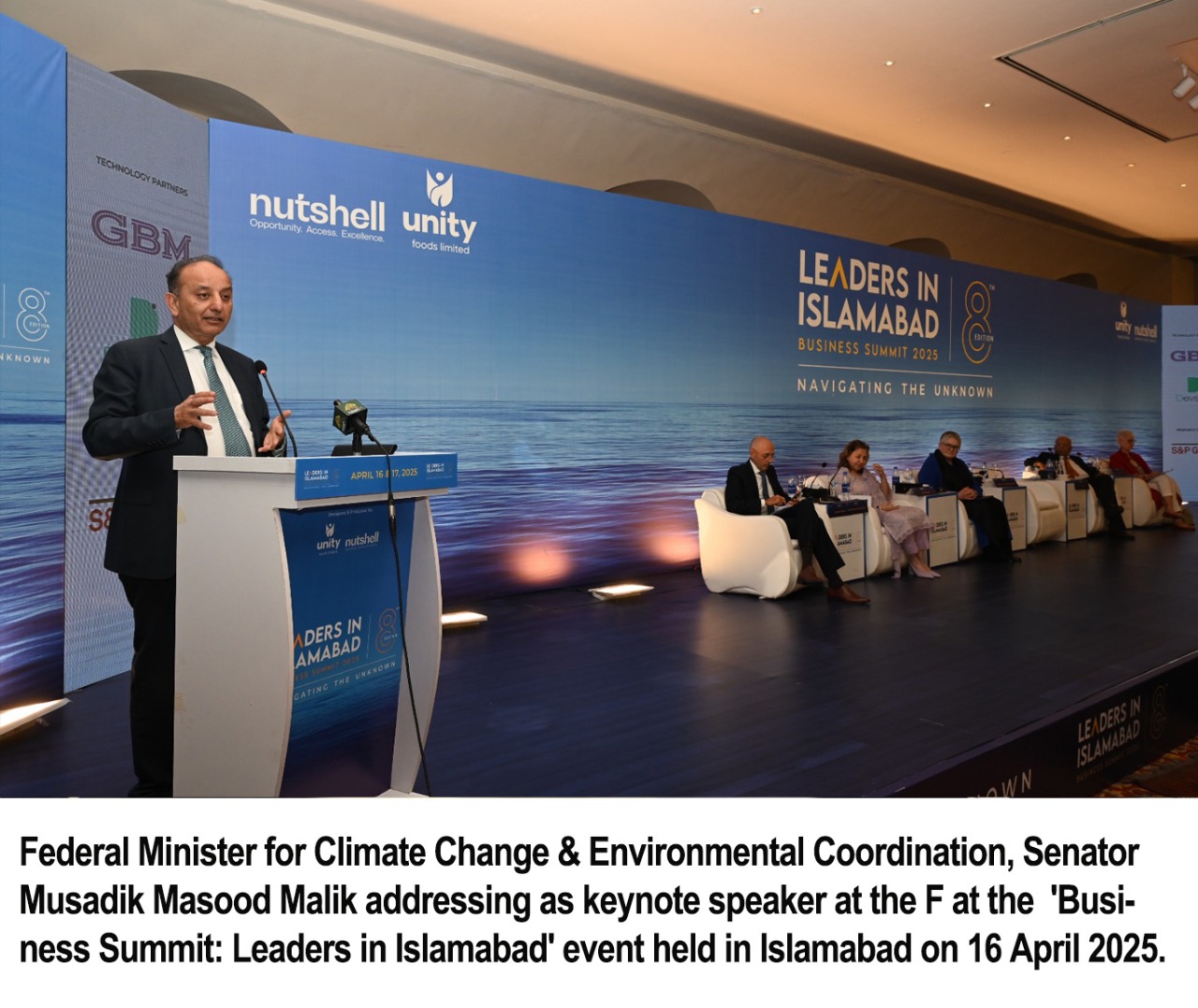
Islamabad, Pakistan – April 16, 2025 – Federal Minister for Climate Change and Environmental Coordination, Senator Musadik Masood Malik, has emphasised that the global fashion industry is one of the largest contributors to waste, with millions of tons of clothing ending up in landfills each year. However, promoting the used textiles trade is vital to mitigate this issue by diverting pre-owned clothing from landfills. “Through recycling, reusing, and upcycling, the life cycle of textiles is extended, significantly reducing the amount of waste that is ultimately discarded. This directly contributes to reducing the environmental footprint of the fashion industry,” he said while addressing an important dissemination meeting on circularity and the used textiles trade in Pakistan. The meeting was organised here on Wednesday by the a non-governmental organization in collaboration with the United Nations Environment Programme (UNEP) and the European Union. The discussions during the meeting focused on the intersection of climate action, circular economy, and inclusive development. Minister Malik emphasised the growing significance of Pakistan’s used textile trade, which has become more than just a commercial activity. It serves as a model for environmental stewardship, social equity, and economic resilience. In 2024, Pakistan’s used textile exports exceeded USD 283 million, a notable increase from USD 255 million in 2023. Pakistan remains one of the top three global re-exporters of second-hand clothing, contributing nearly 60% of the country’s total textile exports. "The trade in used textiles is about people—especially those who rely on affordable clothing, and the thousands of informal workers in this sector, many of whom are women, who support their families and contribute to the circular economy," said Minister Malik. "This sector is critical for the millions of Pakistanis, particularly the 39% living below the poverty line, providing access to affordable clothing, especially in extreme weather conditions." The Minister also highlighted Pakistan’s impressive circularity performance in the used textiles sector, as less than 1% of used textile imports end up in landfills. With Faisalabad processing over 85% of the country’s textile waste, Pakistan’s recyclers handle between 1,000 to 3,000 tons annually. Despite limited resources, Pakistan has demonstrated exceptional efficiency in turning waste into resources—making a substantial contribution to global climate action, Mr. Malik added. However, the federal minister Malik acknowledged the challenges facing the sector in the post-COVID-era, particularly the increasing influx of textile waste instead of genuine second-hand goods. The lack of globally accepted criteria to differentiate between second-hand textiles and waste has put pressure on domestic systems, undermining recycling efforts, the minister pointed out and called for international cooperation to address these regulatory gaps. The federal minister and said that the Ministry for Climate Change is working on the country’s first-ever National Circular Economy Policy in collaboration with different relevant stakeholders. This policy aims to shift the country’s industrial approach towards greener, circular practices, with the used textiles sector recognized as a national success story. Meanwhile, he urged the European Union to consider the role of countries like Pakistan in the global textile waste crisis. “While tariffs, such as the Carbon Border Adjustment Mechanism (CBAM) and the Ecodesign for Sustainable Products Regulation (ESPR), are part of climate responsibility, incentives must accompany regulation,” he said. “Pakistan is managing a textile waste crisis largely generated by the Global North, and we do so without recycling fees or support. This is a service to the global environment that deserves acknowledgment and support.” Minister Malik further emphasised that global support is crucial to promoting equitable development and greening the global value chain. He called on developed nations to recognize and support sectors, such as Pakistan’s textile waste recycling efforts, which are helping to convert waste into valuable resources and contribute to global sustainability. “By reinforcing the importance of partnerships, policies, and a shared commitment to a fair and circular future. "Pakistan has shown that circularity is possible, even with limited resources. Imagine what more we can achieve with the right global support," federal minister Musadik Malik highlighted.